
Was finally time to make all the 1×2s for wales and chines. Not the most exciting of days, but necessary.
My plan initially called for choosing one 12′ 2×4 for wales and then a second 12′ 2×4 for the keel and chines. I had mapped out each cut for each part, and, in a perfect world, I could have made do with the 2 lengths (plus a random length of 2×4, maybe 4′, for the inwale spacers, since I need 30 at 4″ each, which is a total of 120″).
But my stock was far from perfect. There were some serious checks and chips at the ends of the lengths. But, handily, I had bought three 2×4s, initially thinking that I could cut a single 2×4 into only three 1×2s, but I am actually able to cut a 2×4 into four 1×2s. So, generally, I needed five 12′-lengths of 1×2, which I could pick out the best 5 from the twelve 12′-lengths of 1×2 I cut from the three 12′ 2×4s.
Except that the keel is a 12′ 1×3 instead of a 1×2, so that required a sideways cut of one of the 2×4s, losing out on three 1×2s from that 2×4. So best 5 out of 9. But I did end up with two 12′-lengths of like 1/2″ × 1-1/2″ stock, which I think maybe I’ll use for bottom runners on either side of the keel. Maybe.
The weather was pleasant (a high of 48˚ on Saturday 1/27/19), so I probably could have cut the 2×4s in the driveway. I had moved the table saw back down to the basement, though, and I really didn’t feel like dragging it back upstairs and outside. It’s portable, on wheels and all, but it weighs 100 lbs. and I ain’t a young man anymore. It’s hard getting it up and down steps.
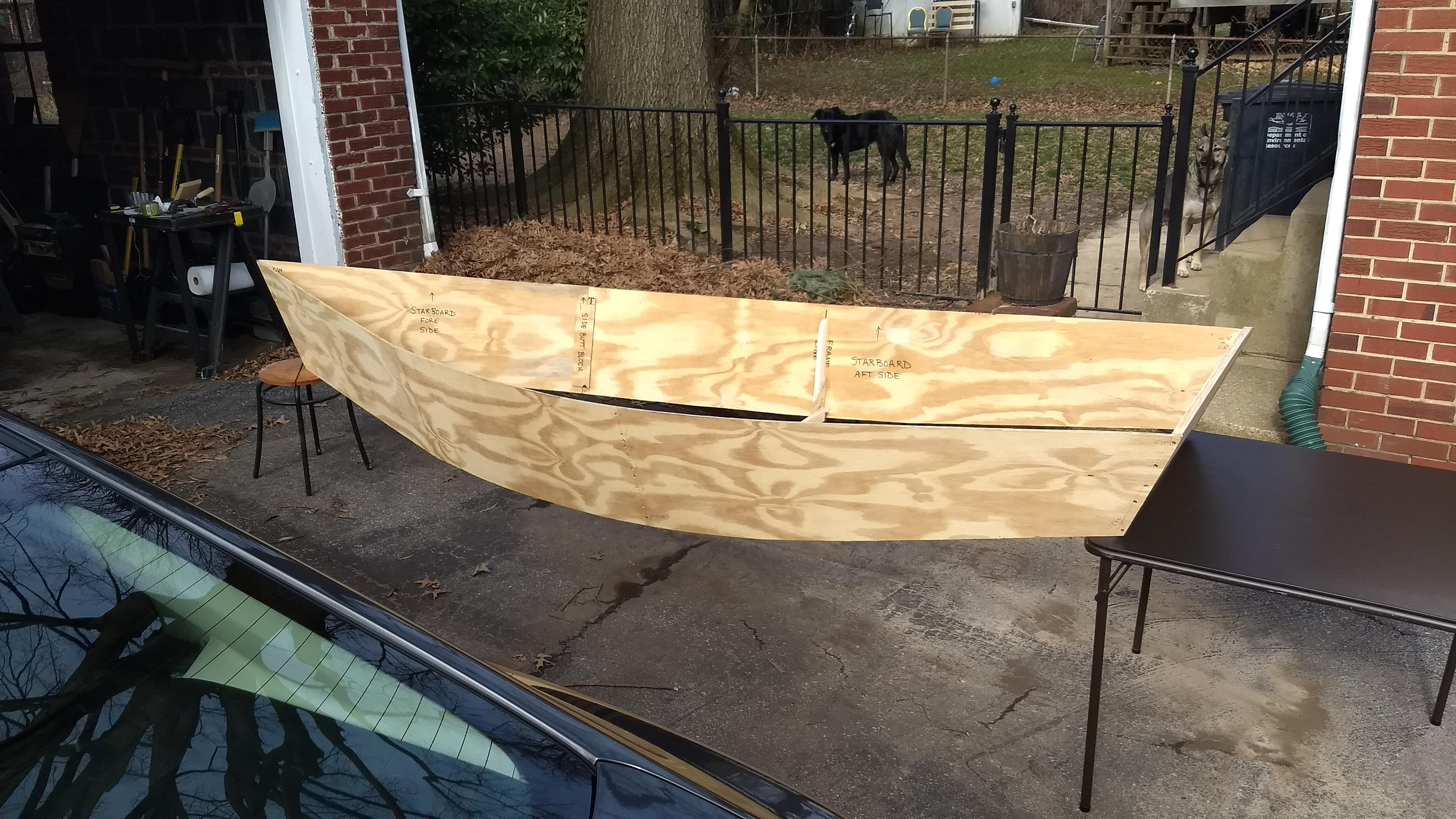
And, besides, the planer is in the basement workshop, and that also weighs 100 lbs. and is very much not portable. It’s hard enough just moving it onto a workbench.
So with the stock in the basement, it was time to start cutting. And there’s where my first problem arose, which was the length of the lumber. I needed 12′ on the one side to feed the stock into the saw, and I needed another 12′ on the other side to complete the cut. I hadn’t appreciated before that I would need 24′ of room just to work. Luckily, the basement is 30′ long, so I had just enough room to work.
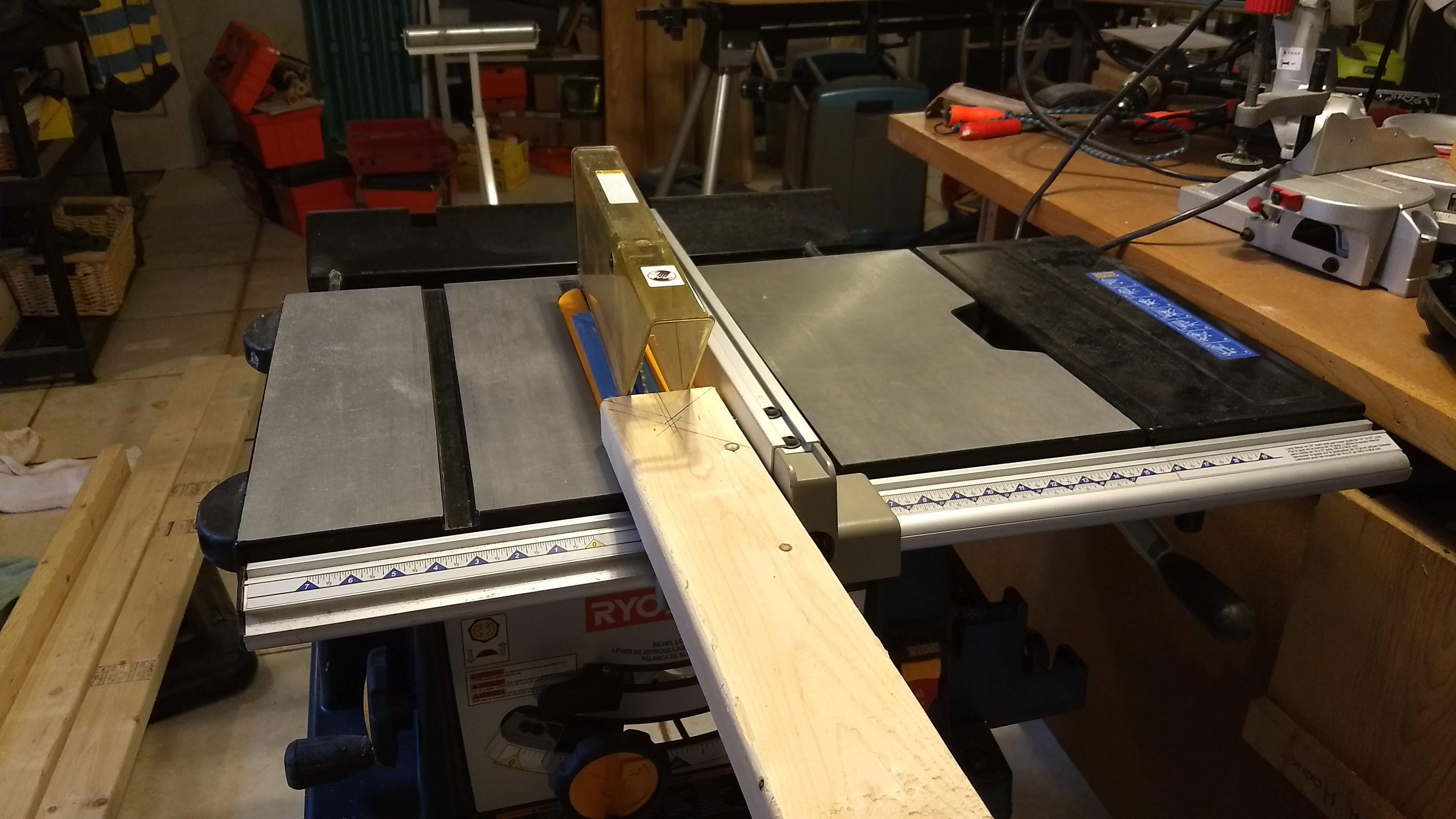
Barely, since it meant that the washing machine served as an infeed table. But, hey, whatever works.
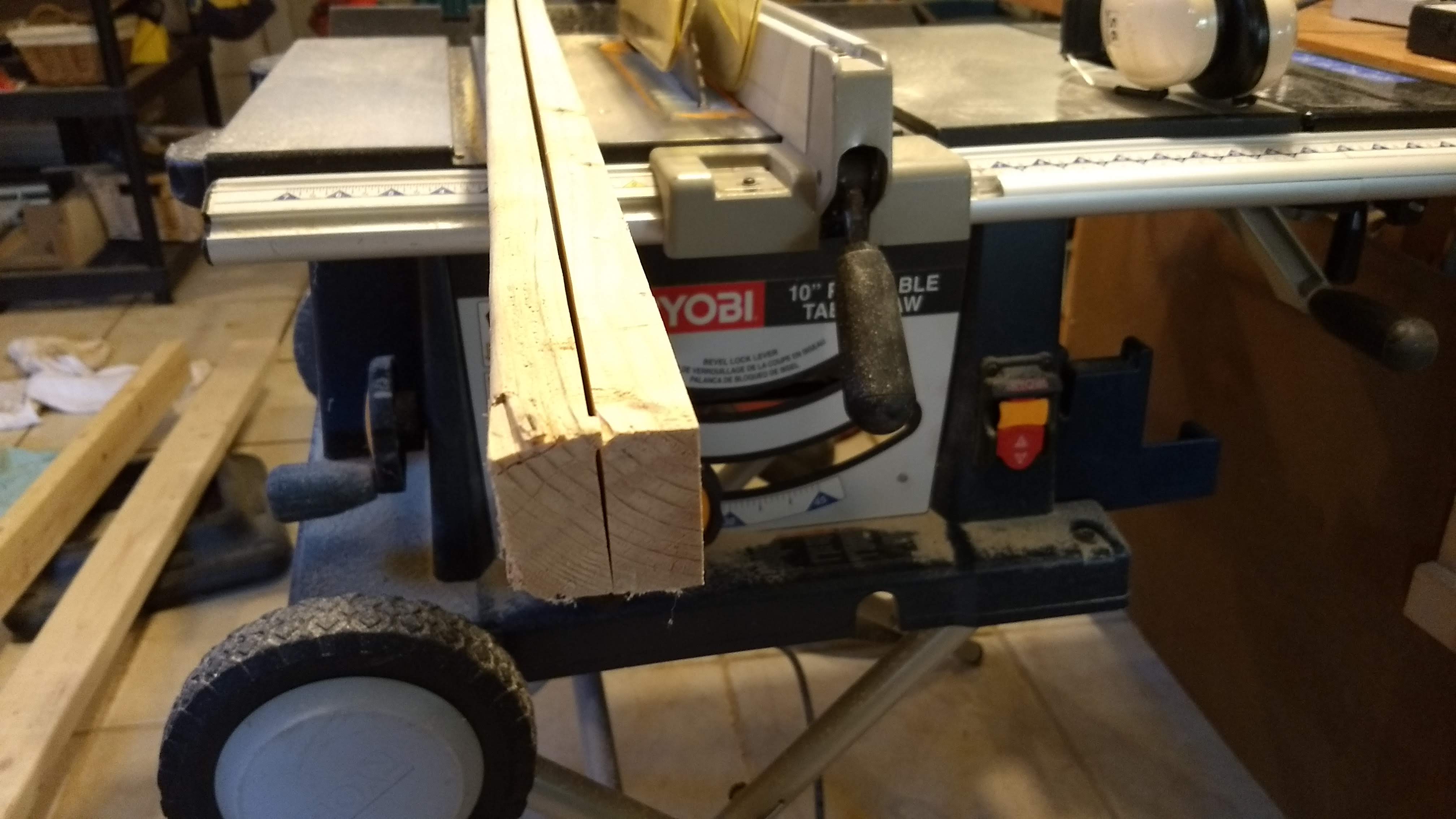
After I cut all the stock, I planed it on both sides down to 5/8″ thickness, roughly. It was rather easier feeding stock through the planer than the saw, since the planer has its own feeder rollers, plus the planer sits on the miter saw stand that I have, which miter saw stand has extension arms. The arms are made for up to 9′ stock, alas, not 12′, so I still had to use the washing machine as an infeed table as well as the outfeed roller stand. But, again, somewhat easier.
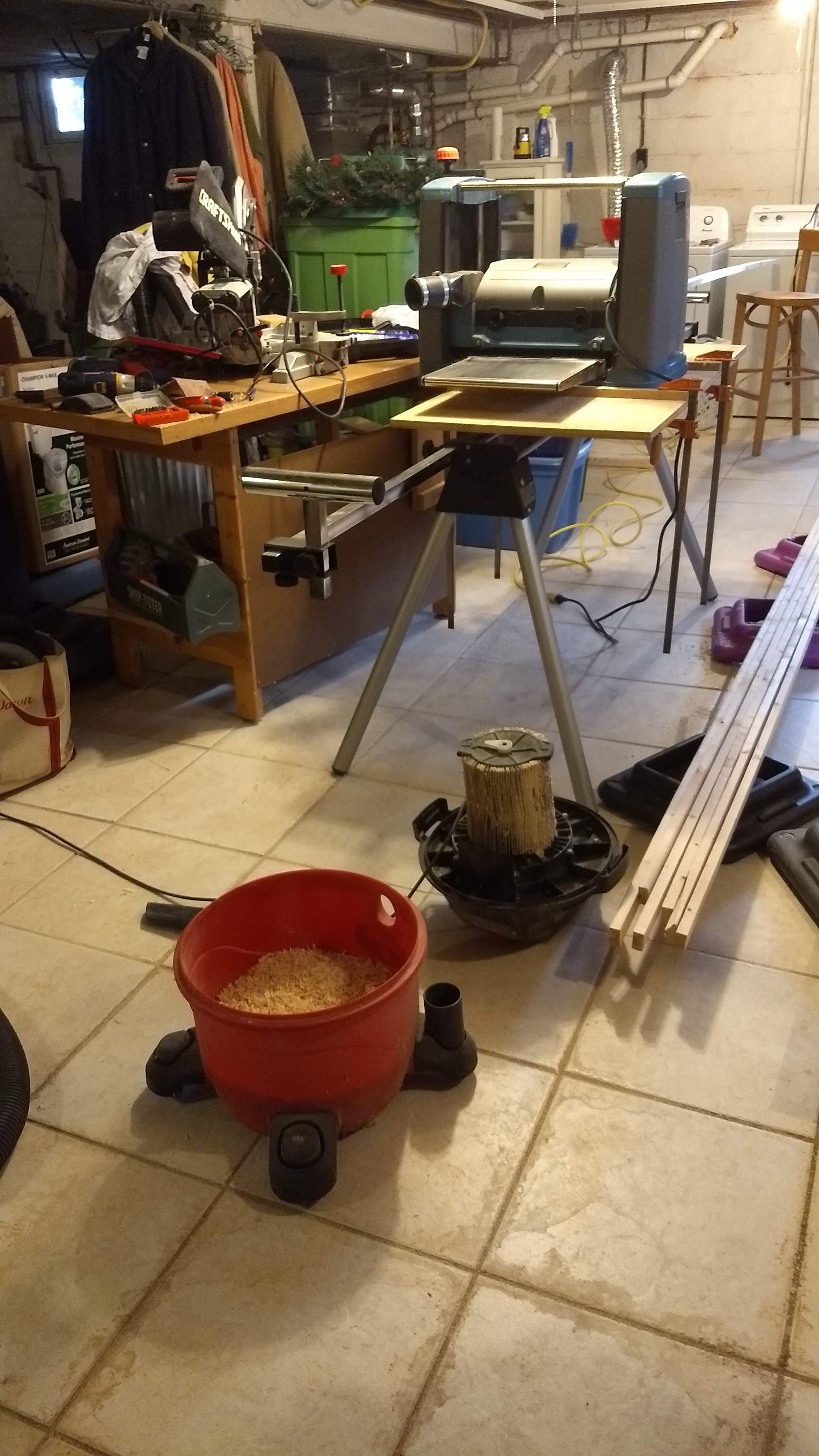
So, then, in the end, I had 12′ 1×2s for gunwales, inwales, and chines, as well as various lengths of 1×2 to chop into 4″ lengths for inwale spacers. And I had my 12′ 1×3 for the keel, although it’s nowhere near straight enough, I think. It’s got a mighty serious crook to it, serious enough that I might spring for another $7 for another 12′ 2×4.
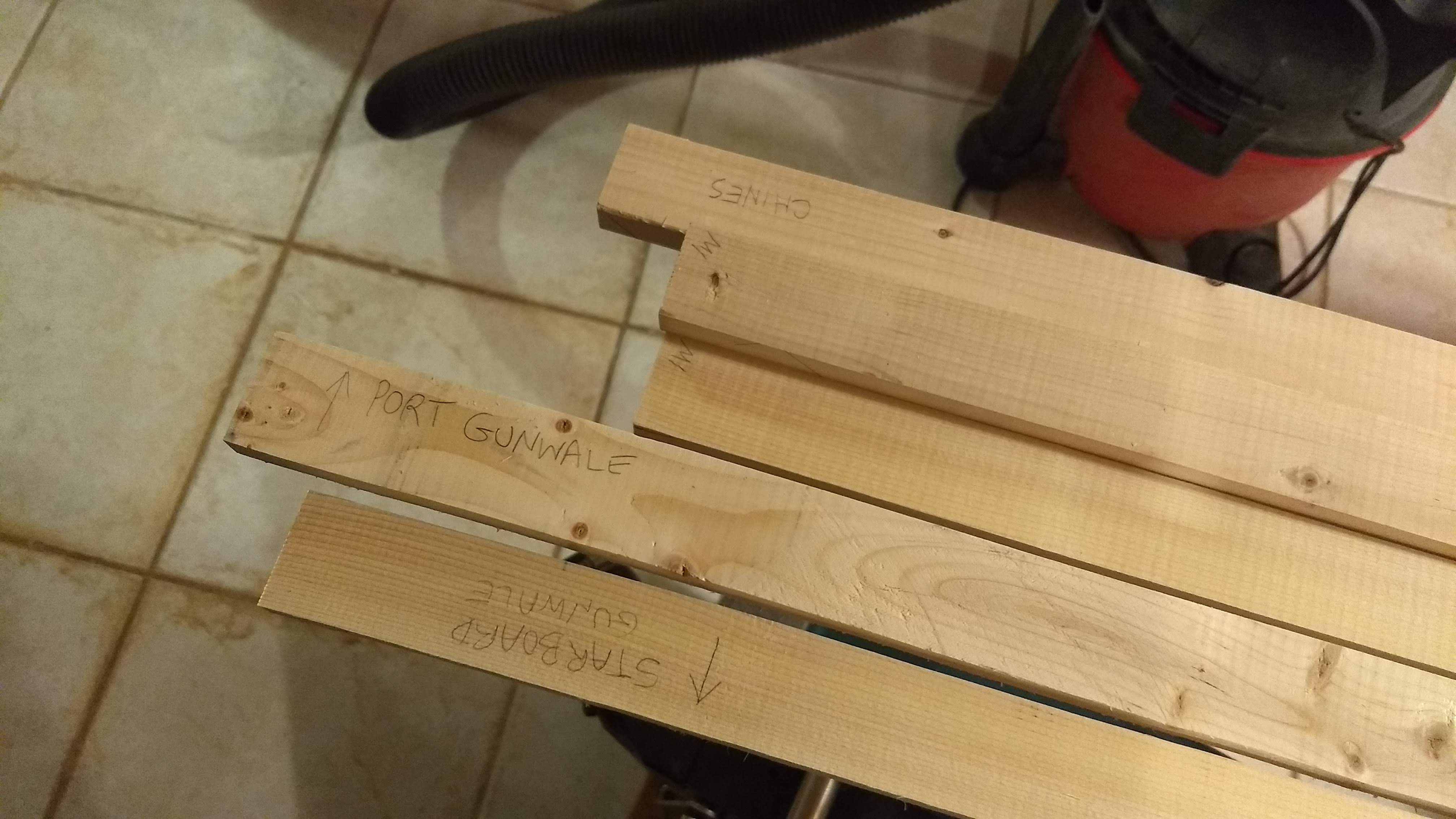
I still have to cut the chine piece lengthwise at 18˚ for the two chines, as well as cut the inwale spacers. But, generally, the greater part of milling is behind me.
Lesson 1: Count on length
If you need to cut or plane a piece that’s 12 feet long, you need twelve feet going into the machine and twelve feet on the other side coming out of the machine.
Lesson 2: Sawdust
Milling a lot of material makes for a lot of dust. Use the big two-stage can next time.