
One last thing that I had to do, before varnishing the oars, was to install collars where the oars will sit in the oar locks. Such collars are traditionally made of leather; indeed, Jim Michalak calls them “leathers.”
He doesn’t use leather, though, for the leathers. Instead he uses synthetic masons twine. So, then, as do I. He varnishes the twine along with the wooden oars, except for leaving the handles bare. Again, then, so do I.
It’s a little harder than I’d planned, getting the slippery twine wrapped around the slippery shaft of the oil-stained loom. He says to secure the ends with knots, but the best way I find to begin the wrapping is to wrap the twine over itself, trapping itself tight underneath. This works just fine at the beginning of the wrap, but there’s no way I can do it at the end. On the first oar, I handily have a singed end just the right length to hitch around and bind where I want it to end. The second oar takes a little finagling but ends up ending the same way.
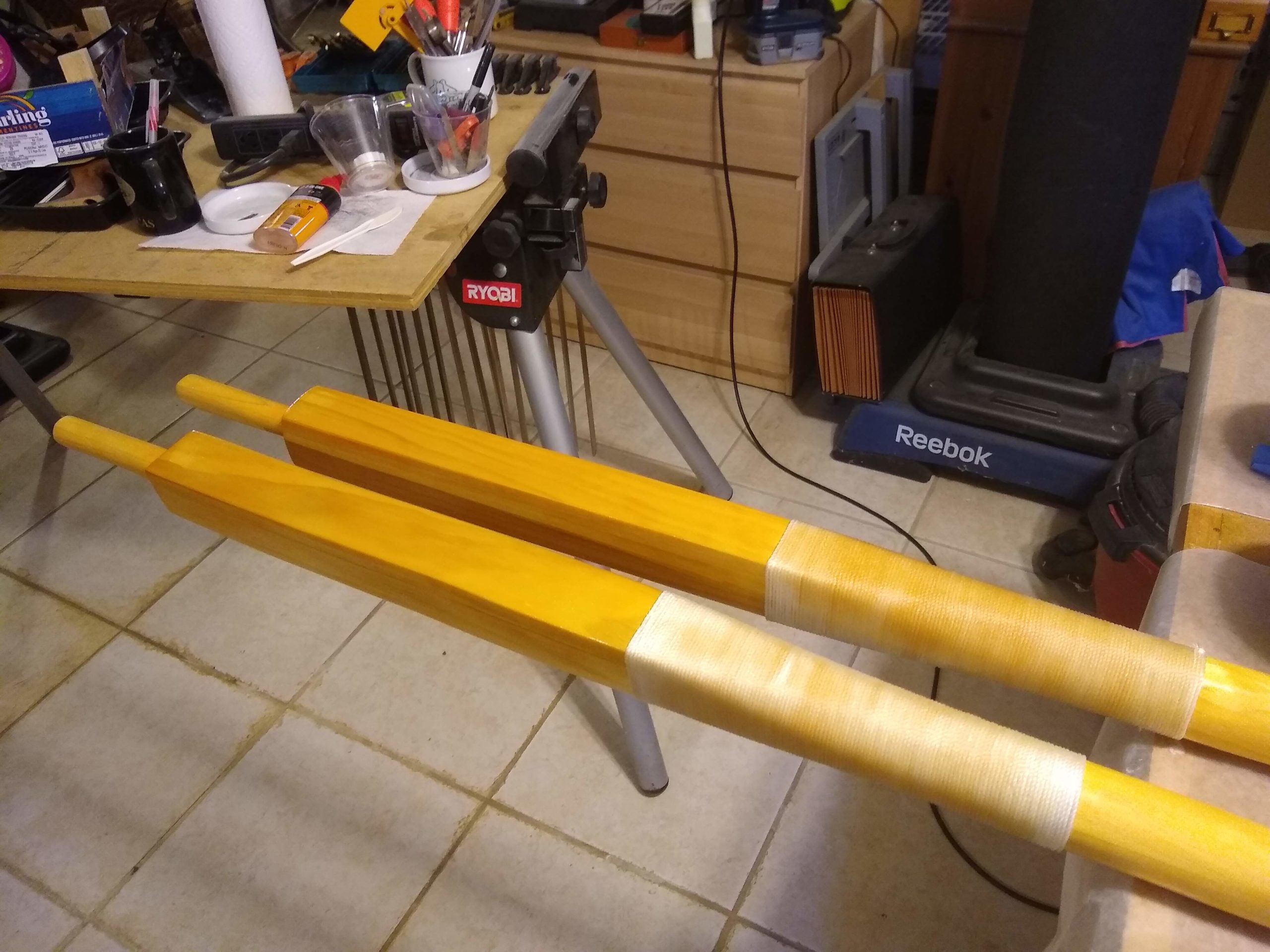
Then it’s time to varnish. The synthetic twine doesn’t soak up the varnish as well as I’d like, and the dark varnish turns the white twine a sickly baby poo brownish yellow. But, the first of a planned three coats is on and left to dry.
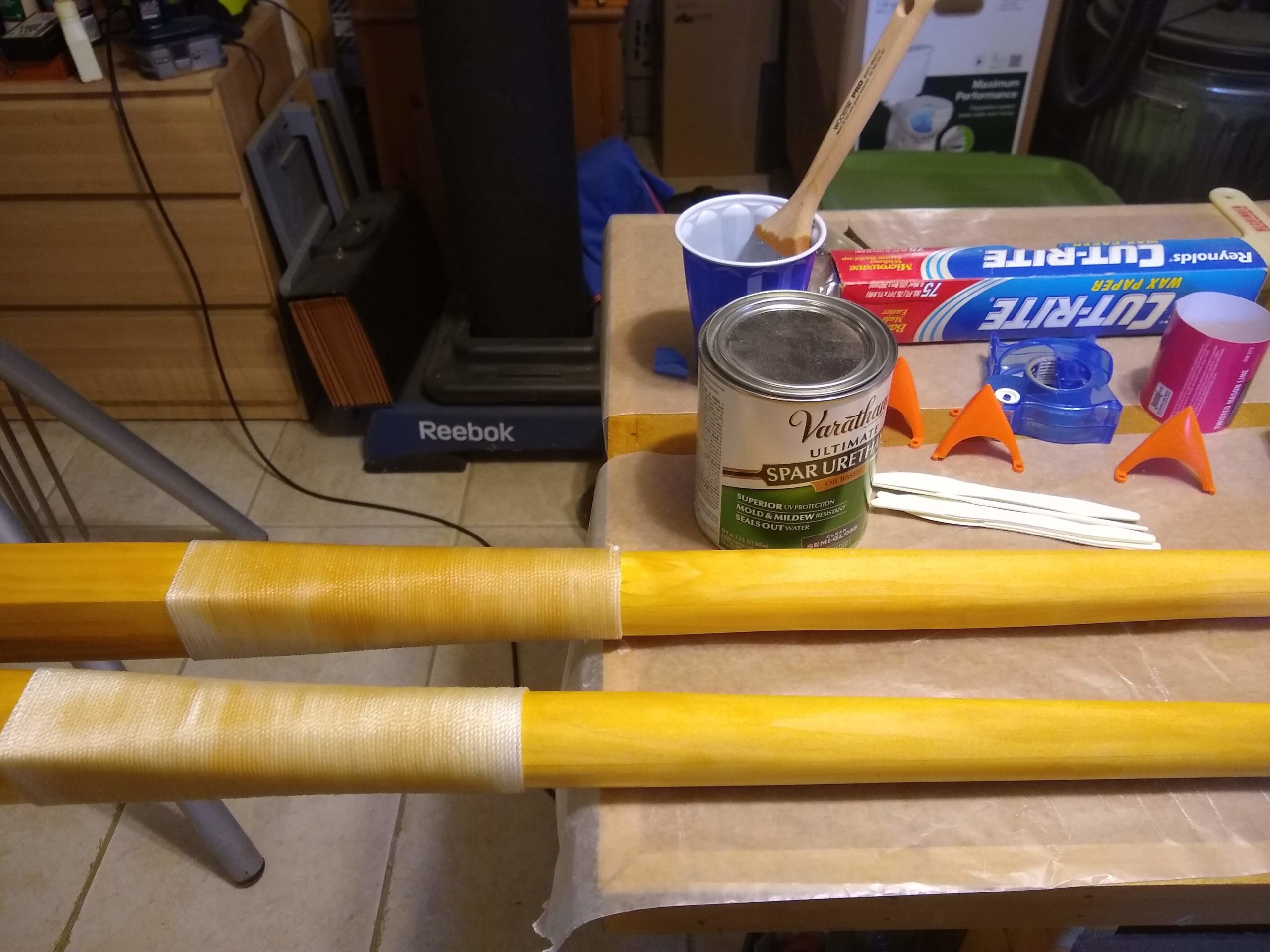
Lesson 1: Varnish vs. Epoxy
I ended up using epoxy on the ends of the twine, to make sure it stayed put. The epoxy doesn’t take varnish, of course, so it’s very visibly whiter where there’s epoxy versus where there isn’t. It’d be better to apply all 3 coats of epoxy on the twine and then secure the ends with epoxy.